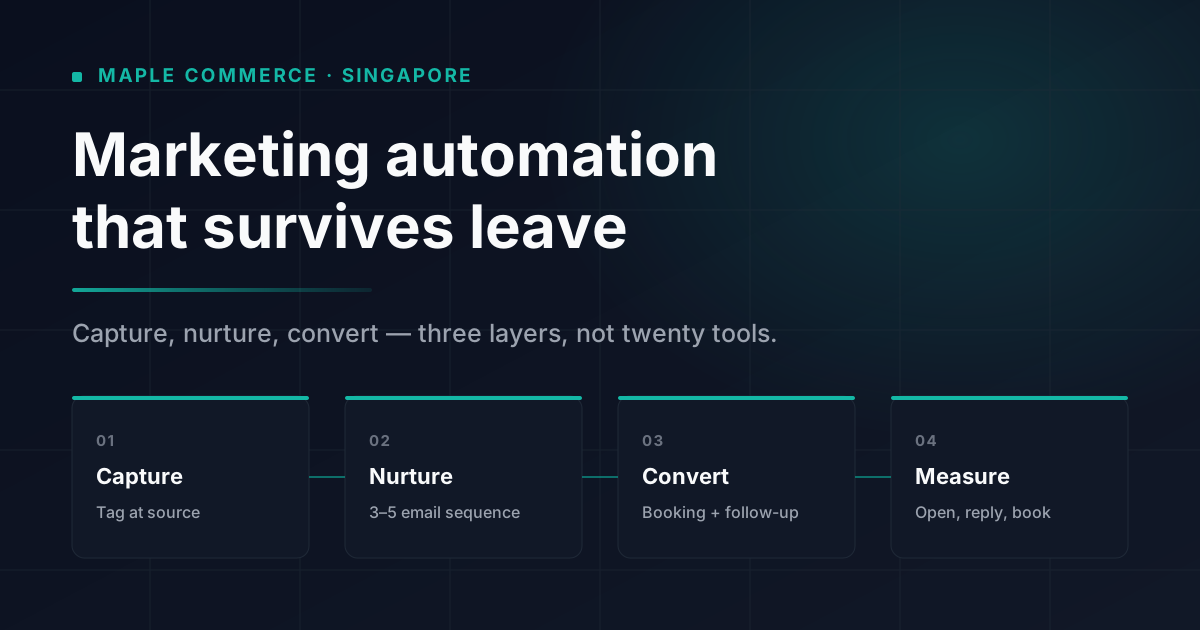
For a Singapore SME, marketing automation means replacing repetitive marketing tasks with systems that run without you — capture, nurture, convert. A workable stack costs roughly SGD 150–250 a month and returns 8–15 hours a week that were going into manual sends, follow-ups and report building.
Most SME owners I talk to have tried at least one automation tool. Most abandoned it within three months — not because the tools are bad, but because nobody told them what to expect. Here is what I have learned running this for Singapore businesses, including my own.
What does marketing automation actually mean for a 20-person company?
Not enterprise software at SGD 5,000 a month. Three things:
- Email sequences that run without you — welcome series, nurture flows, re-engagement.
- Lead capture that works while you sleep — forms and landing pages that qualify and tag prospects as they arrive.
- Reporting you do not have to build — dashboards that show what is working without a data analyst.
The compounding is the point. Getting five hours a week back is 260 hours a year, or roughly six and a half working weeks.
What are the three layers of an automation stack?
Most SMEs need three layers, not twenty tools. Skipping the middle one is the single most common and most expensive mistake.
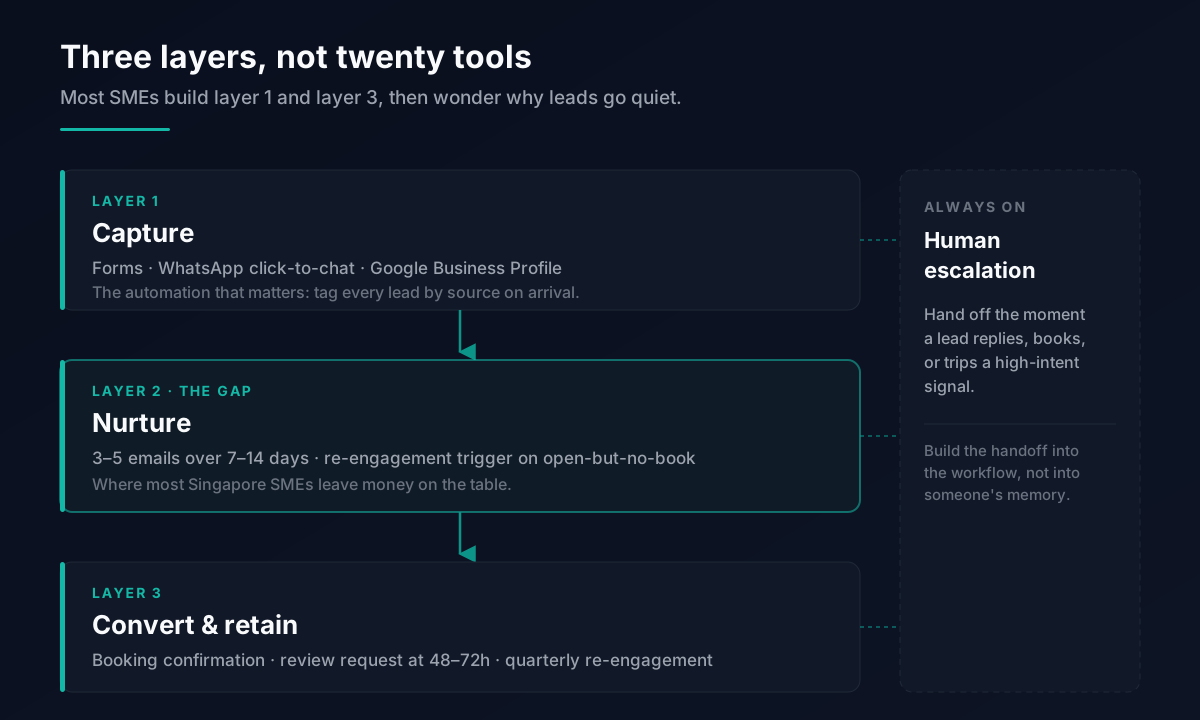
Layer 1 — Capture. How leads enter: a form, a WhatsApp click-to-chat entry point, a Google Business Profile for local discovery. The automation that matters here is tagging at source. A lead from a LinkedIn ad should enter a different sequence than one from an organic search.
Layer 2 — Nurture. What happens between first contact and the booking. This is where most Singapore SMEs leave money on the table: there is a capture mechanism and there is a sales conversation, and nothing in between. A three-to-five email sequence over seven to fourteen days, plus a re-engagement trigger for leads who open but do not book, covers most of the gap.
Layer 3 — Convert and retain. Booking confirmation with a preparation checklist, a review request timed 48–72 hours after service, and a quarterly re-engagement for dormant clients.
Every layer needs a human escalation path. Automation should hand off to a person the moment a lead replies, books, or trips a high-intent signal. Build the handoff into the workflow, not into someone’s memory.
Which tools should a Singapore SME actually use?
This is the stack I run on maplecommerce.com, and the one I would put in front of a 50-person Singapore company. Prices are indicative monthly SGD and move around.
| Layer | Tool | ~Cost | Why this one |
|---|---|---|---|
| Email / nurture | Encharge | 49–149 | Behaviour-triggered sequences, not just broadcasts |
| Email alternative | Vbout | 49–99 | If you also need social scheduling in one place |
| Landing pages | SwipePages | ~29 | Fast, mobile-first, integrates with everything |
| CRM | Salesflare | ~29 | Auto-populates from email — wins for small teams |
| Analytics | GA4 + Microsoft Clarity | Free | Clarity’s session recordings show where people drop |
Total: roughly SGD 150–250 a month. For comparison, a dedicated marketing executive in Singapore’s tight labour market runs SGD 5,000–8,000 a month. That gap is the entire business case, and it is why automation lands harder here than in markets with cheaper labour.
Start with the simplest tool that handles your current volume. Buying HubSpot before you have 200 contacts is a common and expensive way to stall — migrate when you actually have the problem.
What is different about doing this in Singapore?
Three things generic guides miss.
PDPA compliance is a configuration step, not a default. Your stack needs explicit opt-in for email, a working unsubscribe path, and a record of when and how consent was given. Most global tools support this properly. Very few arrive with it switched on.
Bilingual audiences complicate segmentation. If you serve both English and Mandarin-speaking customers, your automation needs language-aware segmentation or it will confidently send the wrong content to the wrong half of your list.
Grants can fund the implementation. For registered Singapore companies the Enterprise Development Grant can subsidise a meaningful share of implementation cost where the project qualifies, and training components may be supported separately under SkillsFuture or SFEC. Most owners do not know this applies to marketing infrastructure. Confirm eligibility for your specific scope before you commit — the rules are specific and the amounts are not trivial.
A market that expects speed. Singapore buyers treat a 48-hour email follow-up as slow. Closing that gap is often the single highest-return automation you will build.
What does a realistic four-week rollout look like?
- Week 1 — Set up the email tool, import existing contacts, build consent-compliant signup forms, tag by source.
- Week 2 — Write and wire a five-email welcome sequence. Write the emails first; wiring them up is the easy part.
- Week 3 — Connect landing pages to your best-performing content and confirm the capture handoff works end to end.
- Week 4 — Set up reporting, review the first two weeks of data, and check every sequence on mobile before you widen the audience.
By week four you should have one automated sequence running and generating data. That is when optimisation starts.
Audit your current follow-up first. If a new lead waits more than 30 minutes to hear anything after submitting your contact form, that is your first automation target and it will outperform everything else on this list.
What do most implementations get wrong?
Automating before the message works. Companies buy the software, build ten templates, blast the whole list, then wonder why open rates are 8%. If your manual emails do not convert, automation sends bad emails faster. Nail the copy on one sequence, one segment, one goal, and measure it for 30 days before expanding.
Ignoring the data. Automation generates open rates, click patterns, page visits and conversion paths. If nobody reviews it weekly, you have bought a more expensive way to fly blind. Three numbers tell you whether a sequence works: open rate, reply rate, booking rate.
Ignoring mobile. A large share of Singapore B2B email is opened on a phone. Test every sequence on mobile before activating it.
No human fallback. Covered above, and worth repeating because it is the failure that costs actual deals rather than actual time.
Where does the AI layer fit?
After the foundation, not before it.
In 2026 automation increasingly carries an AI layer: personalising which email sends based on behaviour, generating copy variants, scoring which leads are worth calling first. Tools like Claude, Make.com and n8n make this straightforward to bolt on without hiring a developer.
But a system that reliably sends the right message at the right time to everyone is worth more than a personalised system running on a broken foundation. Get layer two working, then add intelligence to it. The same sequencing logic applies across AI marketing in Singapore generally — the repetitive, low-judgement work is the first deployment zone, not strategy.
The bottom line
Marketing automation is not about replacing marketing with robots. It is about removing the repetitive work so the time goes into strategy and relationships instead.
If you are spending more than five hours a week on manual sends, lead follow-ups or report building, the stack above pays for itself inside the first month. If you would rather not assemble it yourself, that is what a consultant does — book a discovery call and I will map the roadmap for your team.